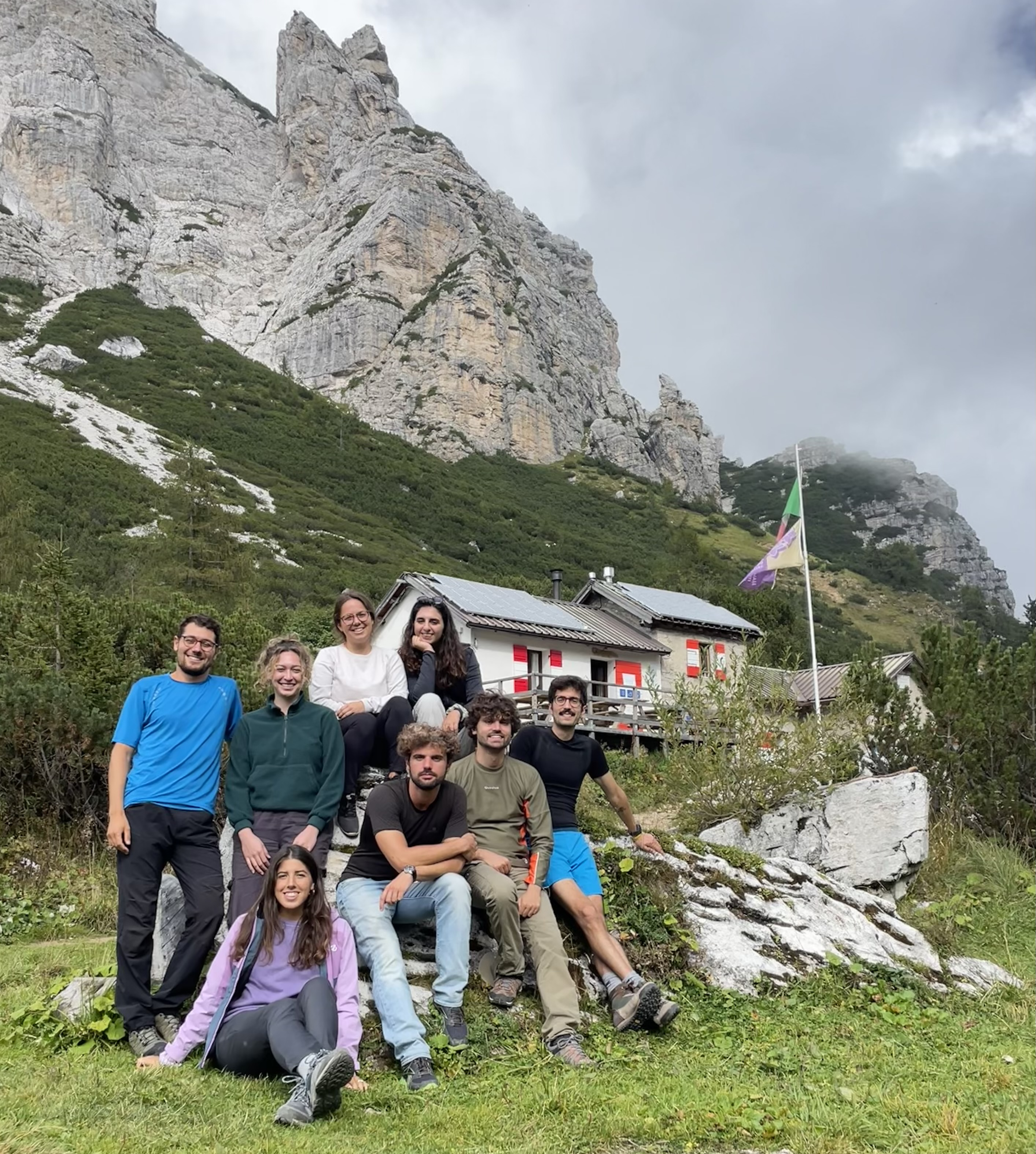
Hi, I am currently a Postdoctoral Researcher at Fondazione Eni Enrico Mattei (FEEM) in the ‘Labour in the Low Carbon Transition’ (LILT) research group.
I am an applied environmental economist studying how climate change affects health and labor markets, exploring its unequal impacts, long-term consequences, and adaptation strategies.
I obtained my PhD in Science and Management of Climate Change from Ca’Foscari University in May 2025.
Curriculum Vitae (Updated November 2025)
Email: giulia.valenti@feem.it, giulia.valenti@unive.it
Bluesky: @giuliavalenti.bsky.social; LinkedIn: giulia-valenti
Office: Corso Magenta, 63, 20123 Milano MI
Working Papers
(with Filippo Pavanello)
Abstract (click to expand): In 2004, Italy introduced a national program to address heat-related health risks, combining public awareness campaigns, heat-wave warning systems, and hospital protocols. Leveraging administrative mortality data and high-frequency temperature variation, we show that the program reduced heat-related mortality by more than 57% on days at or above 30°C. To identify the mechanisms, we exploit the staggered introduction of heat-wave warning systems across provinces and show that treated areas experienced substantially larger reductions in heat-related mortality. We further document that information disclosure plays a key role in driving these reductions. Overall, our findings underscore the importance of public adaptation policies that rely on information provision to cost-effectively mitigate the health impacts of extreme temperatures.
(with Francesco Vona)
Abstract (click to expand): Despite evidence that heat reduces labor supply and productivity, its direct impact on worker welfare through earnings remains unclear. Using SHARE longitudinal data matched with high-resolution E-OBS weather records for over 32,000 workers across 14 European countries (1955–2018), we exploit plausibly exogenous variation in heat wave exposure across cohorts within the same generation and location, controlling for individual fixed effects and occupational sorting. Each additional heat wave day reduces total earnings by 0.31%, with the burden falling disproportionately on exposed occupations and on low-income and disadvantaged workers. Labor market institutions substantially attenuate these losses, revealing their mediating role.
Temperature and Health Capital: Long-Term Consequences of Exposure in Childhood
(with Catarina Midões, Francesco Vona and Enrica De Cian)
Abstract (click to expand): This paper investigates the impact of temperature shocks, measured by the duration of heat and cold waves, on a comprehensive health measure. The proposed metric encompasses a broad range of illnesses that can be triggered or exacerbated by temperature exposure. Within a human capital framework, we approximate health capital loss using the number of days lost due to disability, quantifying the severity of poor health across various life stages. Our results reveal that exposure to heat waves during childhood, particularly before the age of 10, has long-term effects on adult health. It increases the likelihood of developing illnesses and significantly affects both the severity (measured by days lost due to disability) and the duration (years impacted by illness) of morbidity in later life. The heightened sensitivity to high temperatures during childhood can be attributed to physiological factors in development that limit the ability to regulate body temperature effectively. Furthermore, children may have a restricted capacity to express discomfort caused by thermal stress and to adopt protective measures against extreme heat. Our findings show that the effect of exposure during childhood is persistent over time and that childhood exposure significantly shapes the subsequent accumulation of health capital, with potential compensatory behaviours appearing unable to fully mitigate the consequences. Our findings contribute to the assessment of climate change damages and their distributional implications by investigating long-term health consequences. Additionally, our study provides valuable insights into the literature on early childhood shocks, by considering the under-explored role of temperature shocks.
(with Catarina Midões and Nicolò Gebbani)
Abstract (click to expand): Incarcerated people, an extremely vulnerable population, depend entirely on institutional decisions for heat protection, being excluded from or severely limited in every margin of private adaptation, both behavioural and technological. We provide the first evidence on heat and mortality in a national prison system outside the United States, combining daily deaths and suicides in Italian penitentiary institutions from 2002 to 2024 with downscaled ERA5 weather data. A day reaching 35°C carries 19.5% higher mortality and 24.7% higher suicide risk than a day at 28°C. The impacts of heat are substantially larger than in the general population. Heat caused an additional 133 custodial deaths, including 63 suicides, over the sample period. Effects on all-cause mortality were larger in overcrowded institutions. Effects on both overall deaths and suicides were smaller in renovated buildings. These findings suggest that the burden of heat is shaped not only by the state's initial decision to incarcerate, which increases baseline risk, but also by institutional conditions, which affect heat exposure. It can therefore be reduced through public policy.
Work in Progress
The (long-term) consequences of austerity policy on mortality and temperature relationship: Evidence from Italy
(with Filippo Pavanello and Guglielmo Zappalà)
Macroeconomic Repercussions of Heatwave Impacts on Labor Productivity in European Regions
(with Amsalu Woldie Yalew, Francesco Bosello, Catarina Midões and Gabriele Standardi)
Abstract (click to expand): Extreme heat events are becoming more frequent, longer, and intense in Europe, calling for more evidence on their socio-economic consequences. This study assesses the sectoral and macroeconomic consequences of labor productivity losses induced by heatwaves using a regionalized global computable general equilibrium (CGE) model with subnational details for 13 European countries that stipulate several labor market conditions with different possibilities of inter-regional and inter-sectoral labor mobilities. We show that the impacts of heatwaves on labor, on production activities, and on the overall economy are uneven across European subregions, with higher GDP losses concentrated in the southern and eastern Mediterranean regions. Depending on the assumption about how labor market equilibrium is attained, compared to assumptions of no inter-regional mobilities at all, intra-EU or intra-national labor mobility would dampen the adverse effects in some subnational regions but worsen the effects in others. Our findings suggest that policies targeting flexible wages to maintain observed total employment could help to offset some of the adverse macroeconomic impacts.
Presentations
2026: EEA Annual Congress, CEPR Climate Change and the Environment Symposium, WCERE 2026, IV Workshop on Public Policies - IEB, Mannheim Conference on Energy and the Environment - ZEW, IAERE Annual Conference, Internal Seminar at the PIK, Research Lab on Societal Transition and Well-being (invited)
2025: Internal Seminar at the Policy Evaluation Lab, PIK (invited), 66th Annual Conference of the Italian Economic Association (SIE), EAERE Annual Conference, AERE Summer Conference, IZA Workshop on Climate and Environmental Economics, ifo Workshop on the Economics of Adaptation to Climate Change, Workshop IdEP in Sustainable Economics, IAERE Annual Conference
2024: Internal Seminar at the Department of Environmental Science and Policy of the University of Milan (invited), EAERE Annual Conference, Early Career Workshop on the Environment, Climate Change and Diasters: Socio-Economic Impacts and Adaptations (GSSI), Maastricht Workshop on Applied Economics of the Environment, IAERE Annual Conference, 4th Italian Workshop of Econometrics and Empirical Economics: Climate and Energy Econometrics, Inequality and the Environment Symposium for Early-career Reaserchers (Sciences Po’s Center for Research on Social InequalitieS, World Inequality Lab)
2023: SISC 11th Annual Conference
2022: XIV ESPAnet Italian Conference, ETUI Conference - The nexus of climate change and welfare: towards a new concept of the welfare state
Teaching
Fall 2026: Adjunct Professor, Global and Climate Change Economics, MSc in Environmental and Food Economics (University of Milan)
Spring 2025, 2026: TA in Economics and Policy of Climate Change (22h), BA in Environmental Science and Policy (University of Milan)
Fall 2024, 2025: TA in Global and Climate Change Economics (20h), MSc in Environmental and Food Economics (University of Milan)
Fall 2021: TA in Mathematics (30h), BA in Economics, Markets and Finance (Ca’ Foscari University of Venice)
Fall 2020: TA in Statistics (30h), BA in Physical Engineering (Ca’ Foscari University of Venice); TA in Calculus (45h), BA in Physical Engineering (Ca’ Foscari University of Venice)
Blogs
L’infanzia sotto attacco climatico, Equilibri Magazine, 2025
Diseguaglianza economica e emissioni nocive: quale relazione?, Il Menabò di Etica e Economia, 2020
Additional Info
Website: Thanks to Gautam Rao for making his GitHub repository available.